A big factor right now in picking a technology that can power ships in a post fossil fuel world, is the migration path. Here, methanol is a relatively low cost bet because methanol engines can be dual fuel and methanol can also be obtained from fossil fuels (as can ammonia). The currently leading technology, methanol engines, may remain the top choice in a post fossil fuel world, but I would not treat this as a foregone conclusion.
Methanol is a liquid fuel that is already used on ships to power internal combustion engines. Typically, methanol enabled engines are dual fuel and can also take other fuel. In 2025, 140 methanol-powered ships were added bringing the total to 439.
There are two main ways to get methanol.
Ethane is found naturally (and such naturally found ethane is called "natural gas") and is also a byproduct of biological processes, both incidental or deliberate. Since this site is dedicated to replacing fossil fuels, and not with biofuels, this would mean that we should not plan on ethane being our main source of ethanol.
Carbon dioxide is a byproduct of various industrial processes but can also be captured directly from the air. This is called "direct air capture" (DAC). Since we want to dramatically reduce our carbon dioxide production, we would be looking at DAC as our main source of carbon dioxide.
Hydrogen is covered in other pages. It is possible to make it from fossil hydrocarbons but since we want fossil fuel replacement, we would be looking at electrolysis (using electricity to split water into hydrogen and oxygen).
Here is a good article on sources of methanol.
Here is the an article from 2025 on the first commercial scale methanol plant which uses renewable energy but carbon dioxide captured from biogas plants and waste incineration.
A variety of methanol ship engines are available from various manufacturers.
At the end of 2025, 439 methanol powered ships were in operation, including 219 container ships. See this article by Blooming Container ships are worth mentioning because they are often quite big ships. See picture of a 350m methanol powered container ship below.
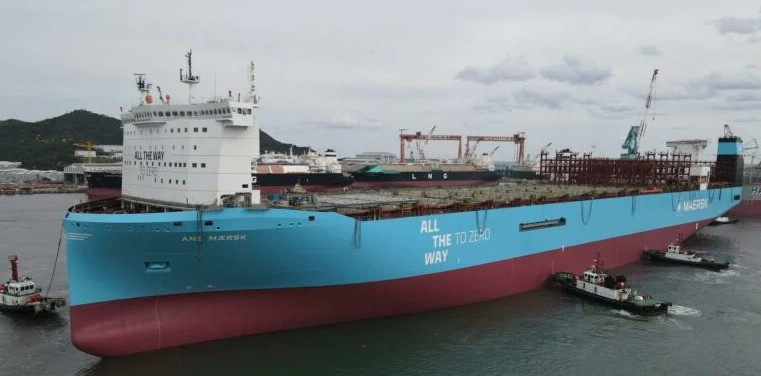
Methanol is the leading green fuel technology for ships right now.
An obvious measure would be to mandate green fuel technology for all new ships used in coastal shipping between Australian ports.
International shipping to and from Australia is more tricky. A reasonable measure would be a small impost on ships not using green technology and a small subsidy on ships using green fuel technology. This could be done in a revenue neutral manner.
Obviously, we need to put in place refuelling capacity with green methanol, made with hydrogen that was created with hydrolysis using renewable energy. I don't see a problem with using waste carbon dioxide from industrial processes, although I would like some proportion of methanol to be made with DAC carbon dioxide.
Ammonia is fuel that is already used on ships. It can be used both with internal combustion engines and with fuel cells.
Ammonia (NH3) is made from hydrogen and nitrogen. Some energy is released in the process (which can be used). However, the flip side of energy being released when combining hydrogen and nitrogen is that the energy is no longer in the fuel, impacting the energy content compared with the hydrogen that went into the ammonia. On top of it, ammonia, as it has gained nitrogen, is obviously heavier than just the hydrogen that went into it. This makes for a much lower energy density, by weight, of ammonia compared with hydrogen. Why bother? Because Ammonia is easier to store and transport than hydrogen. The lower energy density by weight is a problem for road-based vehicles. It is not nearly as big a problem for ships. And that is why it ammonia is emerging as a ship fuel rather than a fuel for cars and trucks.
Ammonia can be burned in internal combustion engines. Ideally, when burned it would produce water and nitrogen. Realistically, some nitrogen oxides are produced. Nitrogen oxides are toxic, so this is undesirable. It is not a new problem and also happens when fossil fuels are burned in internal combustion engines. It takes catalytic converters to clean this up.
Ammonia can be used to provide hydrogen for hydrogen fuel cells. I discuss hydrogen fuel cells in the context of trucks on this page. On the ship, the ammonia is split (using a so-called ammonia cracker) back into hydrogen and nitrogen and the hydrogen is then used in the fuel cells.
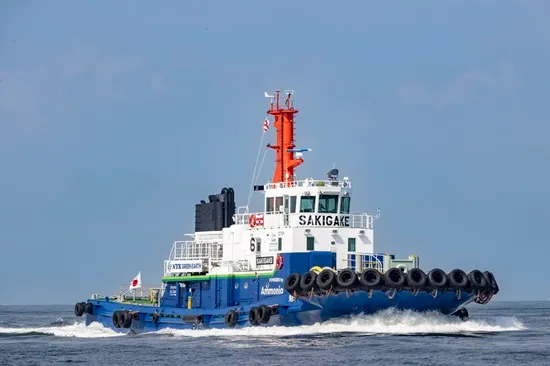
So far internal combustion engines appear to more prevalent. A tugboat with this type of engine is operating in Japan. See article in Nippon Yusen Kaisha. The first commercial engine is available from Japan Engine Corporation. See article in Offshore Energy.
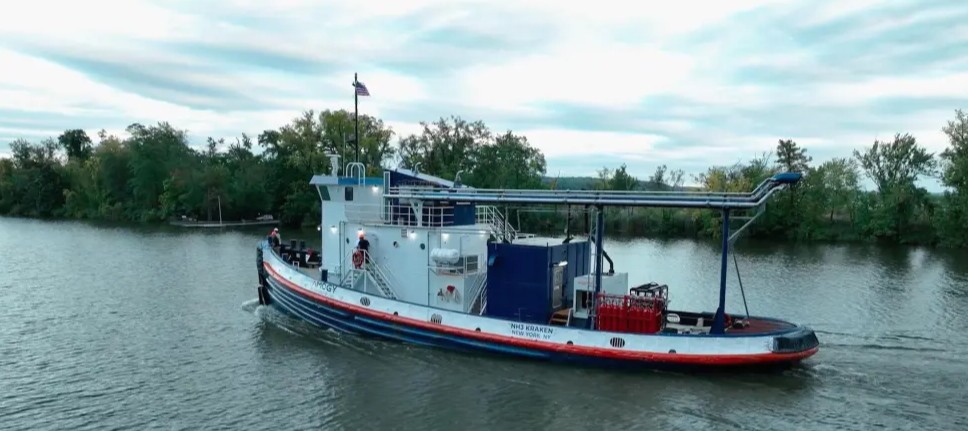
However, in the USA a much smaller tugboat has been converted to ammonia with fuel cell. See AP article
Ammonia right now is not the leading fuel technology. However, we the industry has not written it off.
This article by Blooming gives a picture of ships that will be delivered. So far (as of 2025), ammonia-powered ships were pilot projects but "true batch" deliveries are coming from 2026.
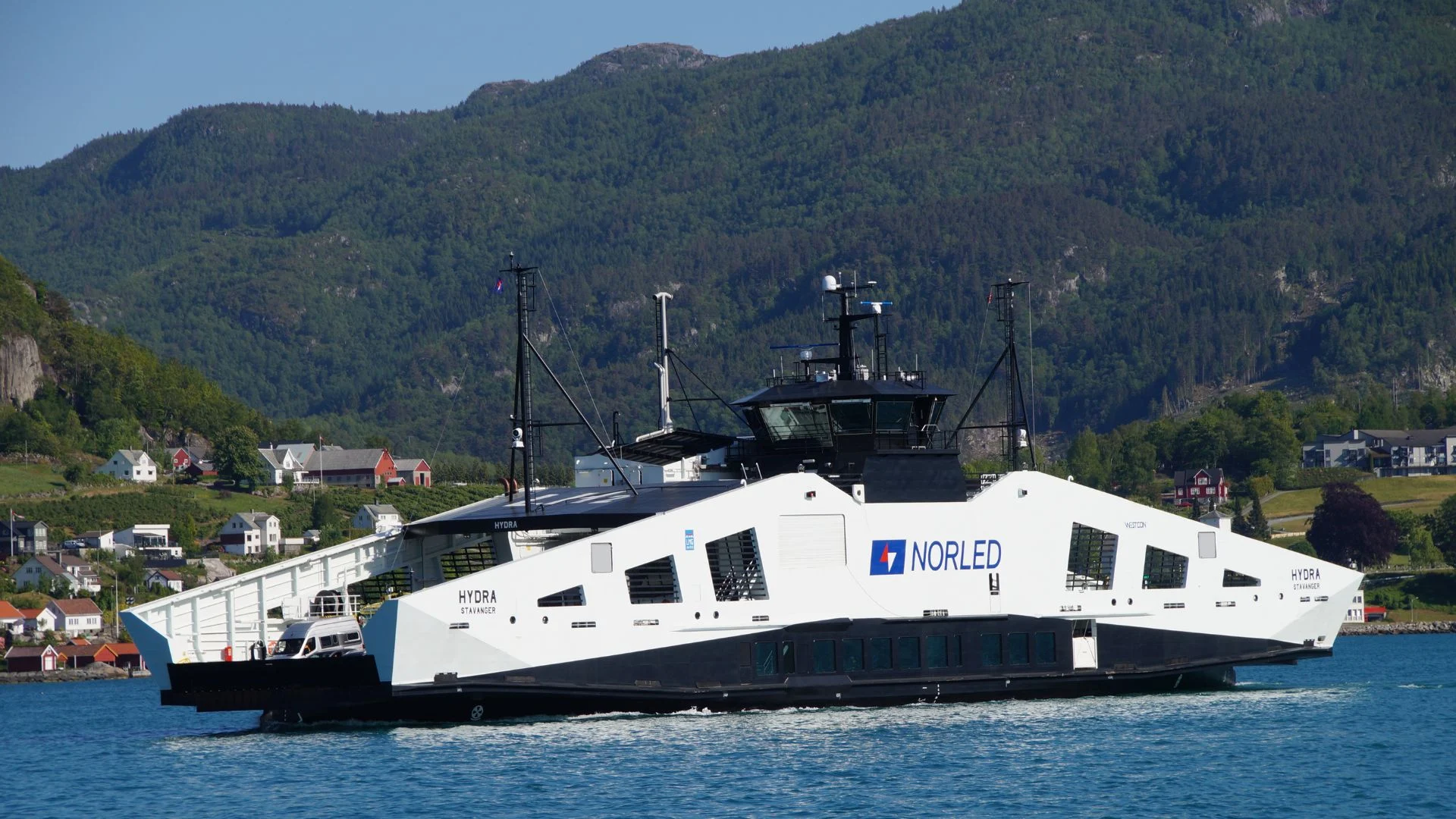
This technology is being tried with ships, though not yet with big ships. See this article by fuel cell manufacturer Ballard on the use of their fuel cells in Norwegian ferries.